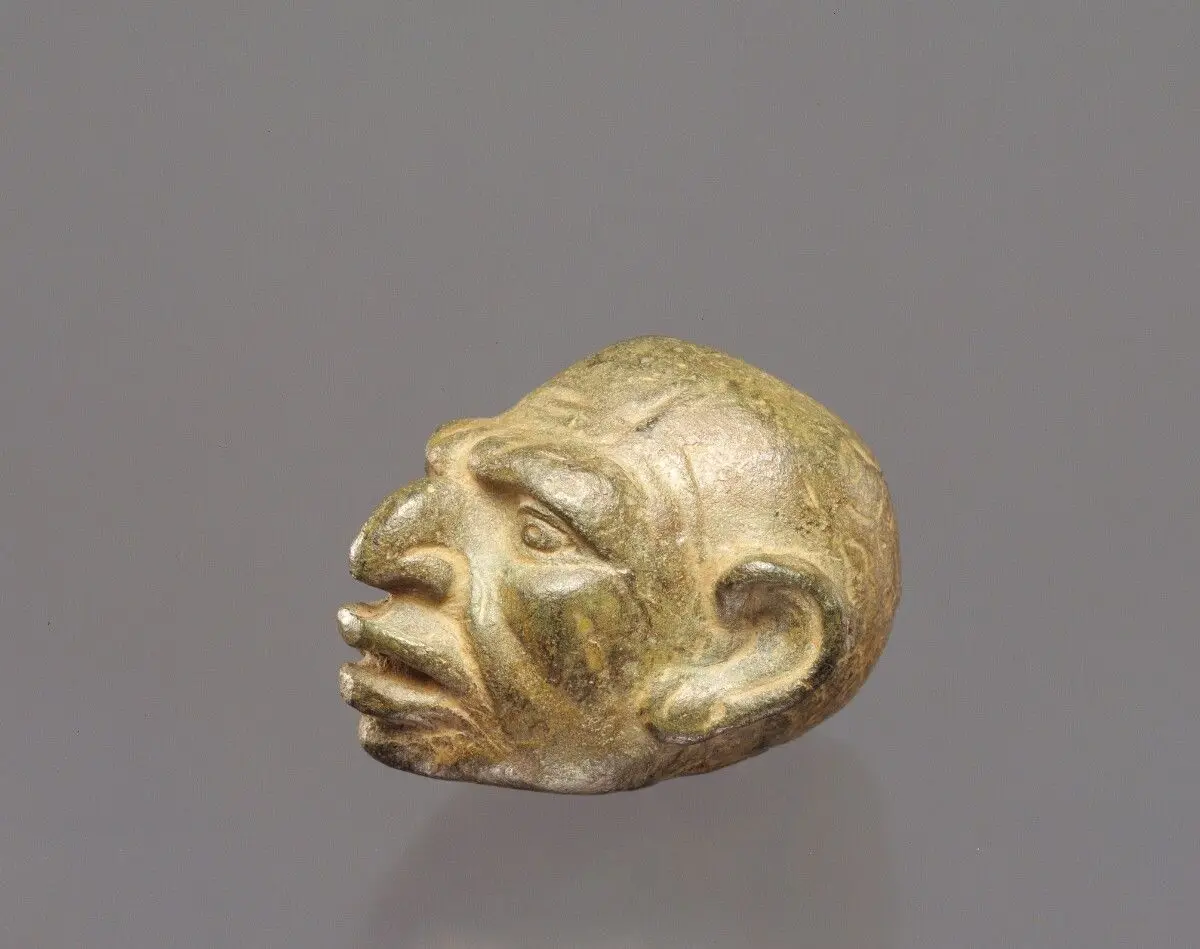
Weight in the Form of a Grotesque Head
about 1st century B.C.–1st century A.D.
Bronze with lead, Bronze, Lead
A bronze weight is shaped like a grotesque head in profile. The head has exaggerated features, including a large nose, wide mouth, and prominent ears. With his thick lips, large ears, prominent nose, and receding forehead, the man depicted on this weight is the antithesis of Greek and Roman ideals of beauty. His head is shaven except for a long lock in the back, now mostly missing. This lock of hair, called a cirrus, marks the man as an enslaved person. In the Aristotelian philosophy popular at the time, it was believed that a person's inner qualities, like character and intelligence, were mirrored by their exterior appearance. Beginning in the Hellenistic period in the late 300s B.C. and continuing into the Roman period, such grotesques and exaggerated caricatures were quite popu
Tags
You may like
Building a new visual wall from this artwork...