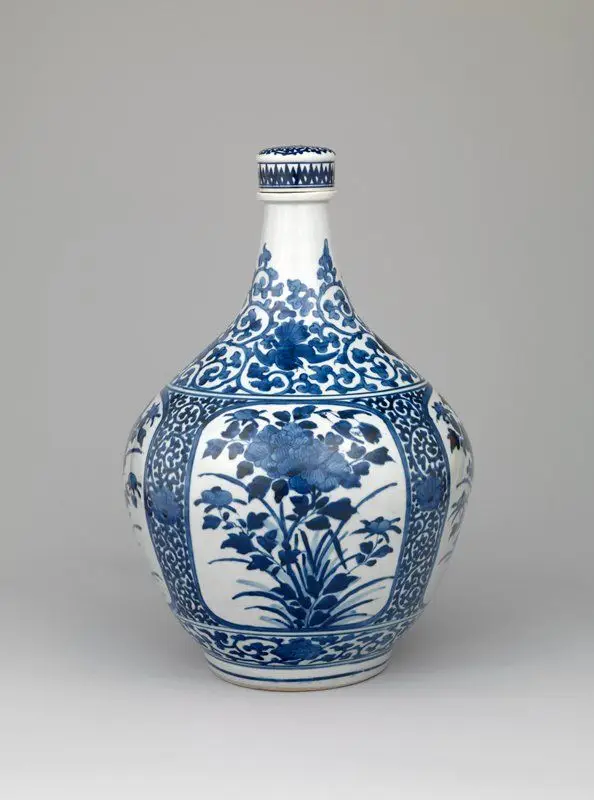
Apothecary bottle with mynas and peonies
c. 1660–80
Arita ware, Imari type, porcelain with underglaze cobalt blue
In the 16th and 17th centuries, blue-and-white porcelains made at China’s famed Jingdezhen kilns were extremely popular in Europe, where the technology required to produce porcelain would not be known for another two hundred years. When the Jingdezhen kilns entered a period of decline in the mid-17th century, porcelain makers in Arita, a town in far western Japan, seized the opportunity. They began making blue-and-white porcelains featuring European shapes and Chinese-style decoration for export to Europe. The combinations of flowers and birds used on many of these works—like myna birds and peonies— came from traditional Chinese-sty
Tags
You may like
Building a new visual wall from this artwork...