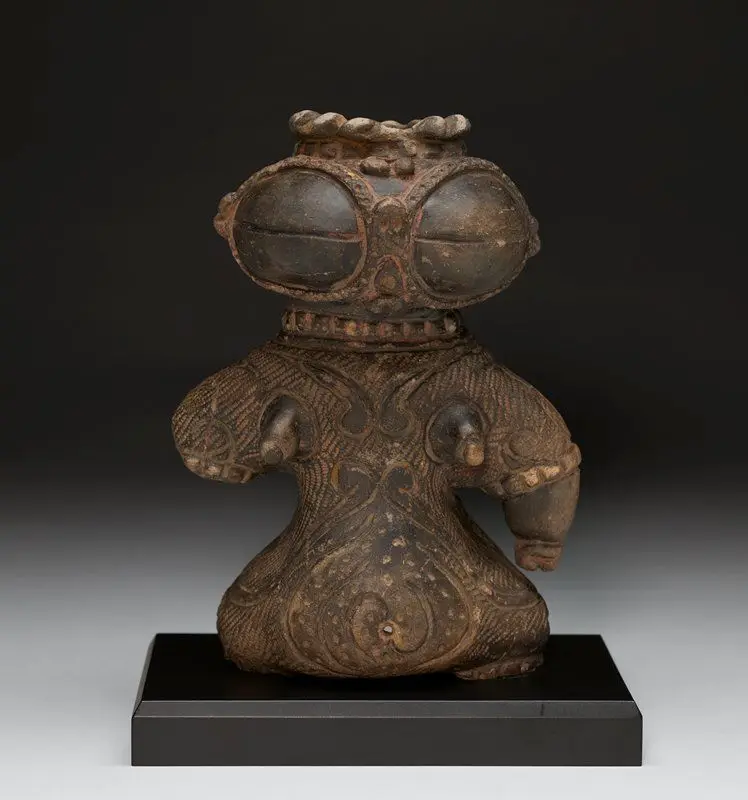
Figurine of a Female
1000–800 BCE
Earthenware with traces of color, base: wood
Over the years, archaeologists have uncovered many different kinds of clay figurines—<i>dogū</i>—dating to Japan’s prehistoric Jōmon period (14, 000–300 bce). The most diverse forms have been excavated in northeastern Japan, where this figurine of a female was discovered. Some are seated, others standing, some have heart-shaped heads, others round and wearing headpieces, some have little or no surface decoration, and others, like this example, known as a <i>shakōki </i> or “goggle-eyed” type, have distinctive large eyes and are adorned with color and complex carved decorations. No one knows for sure how these figurines were used, b
Tags
You may like
Building a new visual wall from this artwork...