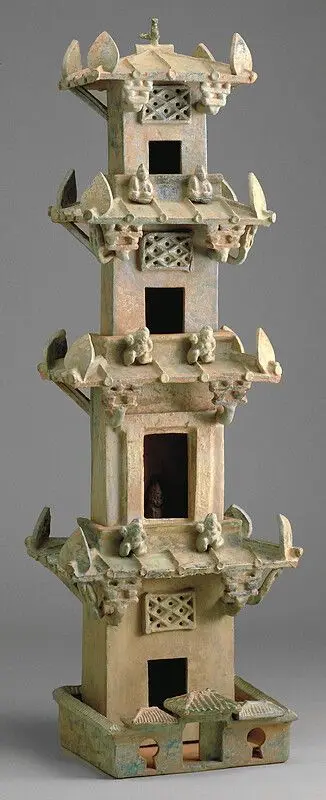
Funerary model of a pavilion
1st century BCE-1st century CE
Low-fired earthenware with green glaze
A glazed earthenware funerary model of a multi-tiered pavilion with decorative eaves and small figures adorning its levels. The structure features open windows and doorways, with a small figure visible within one of the upper openings. Ceramic models of common structures were often placed in aristocratic tombs during the Han dynasty. Improved methods of construction in the Han period led to the construction of many tower-like buildings made of brick, wood and ceramic tile. The model is made up of five detachable sections which together form four levels. Although nearly two thousand years old, it clearly shows the tile roof's cantilever bracket system, deep overhangs and walled courtyard that have remained standard in traditional Chinese architecture to the present day. This basic system of multi-story construction was later adopted to the building of Buddhist pago
Tags
You may like
Building a new visual wall from this artwork...